
Foreclosure vs. Short Sale: Which Is Better?
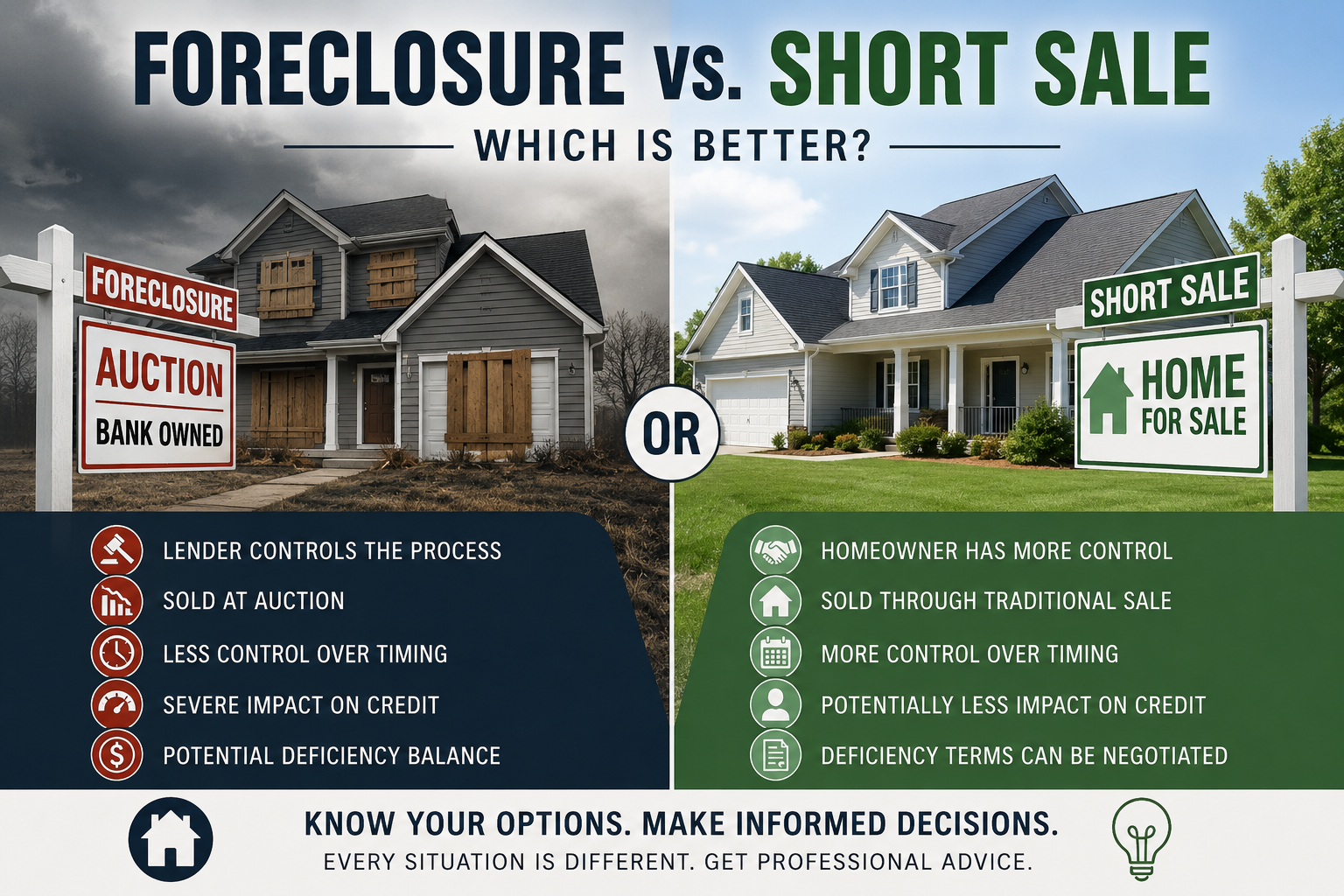
If you’re struggling to keep up with your mortgage payments, you may be wondering what happens next. Two options that often come up are foreclosure and a short sale.
Neither option is ideal, but understanding the difference can help you make a more informed decision before the situation gets worse.
What Is Foreclosure?
Foreclosure is the legal process a mortgage lender uses to take possession of a property when the borrower fails to meet the terms of the loan.
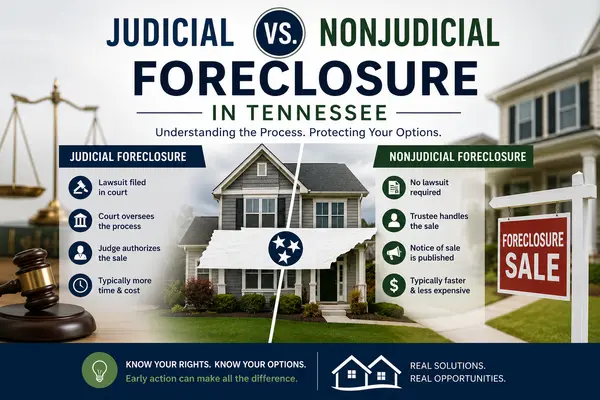
The exact foreclosure process depends on the state and the loan documents. In Tennessee, many foreclosures are conducted through a nonjudicial process, meaning the lender may not have to file a traditional lawsuit in court before proceeding with a foreclosure sale.
Once the foreclosure process reaches the sale stage, the property may be sold at a foreclosure auction. If the home is sold, the homeowner generally loses ownership and must deal with the consequences of the foreclosure.
Potential consequences of foreclosure include:
-
Loss of the home
-
Damage to credit
-
Difficulty obtaining future financing
-
Potential legal or financial consequences depending on the circumstances
-
Loss of control over the timing and marketing of the property
Foreclosure is sometimes unavoidable, but it should generally not be viewed as the first option to consider.
What Is a Short Sale?
A short sale occurs when a homeowner sells the property for less than the amount owed on the mortgage and the lender agrees to accept the proceeds as satisfaction of the debt, either fully or under specific negotiated terms.
For example, suppose a homeowner owes $300,000 on a mortgage but the home can realistically sell for only $250,000 after considering market conditions and selling costs.
The homeowner may seek approval from the lender to sell the property for $250,000.
The lender must generally approve the transaction because the sale proceeds are not enough to pay off the mortgage in full.
A short sale can allow the homeowner to sell the property before foreclosure occurs while potentially giving the lender a better recovery than it might receive through foreclosure.
Foreclosure vs. Short Sale
The biggest difference is who controls the process.
With a foreclosure, the lender ultimately controls the foreclosure process and the property may be sold at auction.
With a short sale, the homeowner generally remains involved in the transaction and works with a real estate professional, buyer, and lender to obtain approval for the sale.
| Foreclosure | Short Sale |
|---|---|
| Lender initiates the foreclosure process | Homeowner typically initiates the sale |
| Property may be sold at auction | Property is marketed and sold through a traditional transaction |
| Homeowner has less control over timing | Homeowner generally has more control |
| Can significantly affect credit | Can also affect credit, but consequences may differ |
| May result in additional financial consequences depending on circumstances | Deficiency issues should be negotiated and documented |
| No buyer is required before foreclosure proceeds | Requires a qualified buyer and lender approval |
Which Is Better for the Homeowner?
There is no universal answer.
However, if a homeowner can no longer afford the mortgage and has enough time to pursue alternatives, a short sale may be worth exploring before allowing the property to go through foreclosure.
One major advantage is control.
Instead of waiting for the lender to complete the foreclosure process, the homeowner may be able to put the property on the market, negotiate with potential buyers, and work with the lender to find a solution.
But a short sale is not automatically better in every situation.
A short sale may make sense when:
-
The home is worth less than the mortgage balance.
-
The homeowner cannot realistically bring the loan current.
-
There is insufficient equity to sell normally and pay off the mortgage.
-
The lender is willing to consider a short sale.
-
There is enough time remaining before the foreclosure sale.
-
The homeowner wants to avoid an involuntary foreclosure sale.
What About Bringing the Mortgage Current?
A short sale isn't the only alternative to foreclosure.
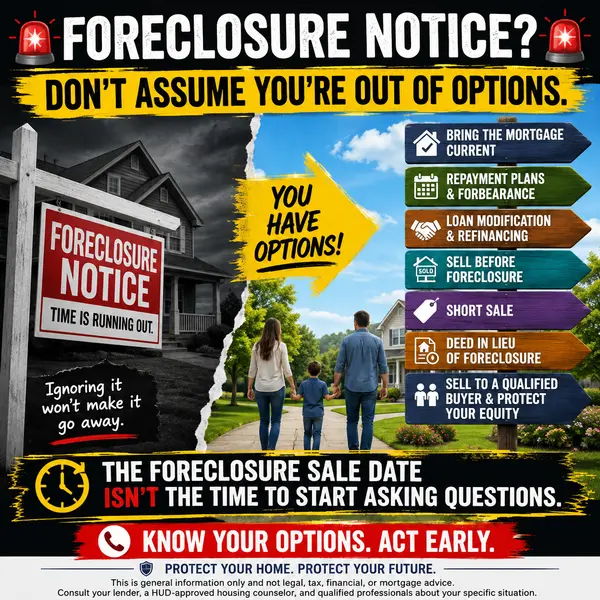
Depending on the circumstances, a homeowner may be able to bring the mortgage current, negotiate a repayment arrangement, seek a loan modification, request forbearance, refinance, or explore other options.
There may also be situations where a qualified buyer or investor can purchase the property and work with the lender to resolve the existing mortgage situation.
This is why homeowners should not assume that foreclosure is inevitable simply because they have fallen behind on payments.
Don't Wait Until the Last Minute
One of the biggest mistakes homeowners make is waiting too long to take action.
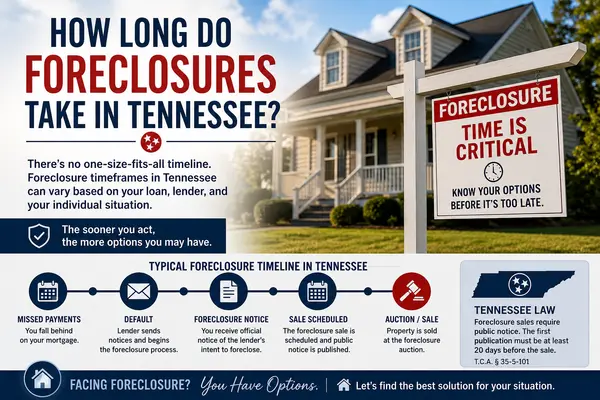
Once a foreclosure sale is approaching, the number of available options can become much smaller. A homeowner who starts exploring solutions early may have significantly more choices than someone who waits until the final stages of the foreclosure process.
If you're behind on your mortgage, determine exactly where you stand:
-
How much is currently owed?
-
How much is the property worth?
-
How much equity exists, if any?
-
How far behind are the mortgage payments?
-
Has a foreclosure notice been issued?
-
Is there enough time to sell the property?
-
Will the lender consider a modification, repayment plan, or short sale?
-
Could selling the property normally resolve the mortgage?
Getting accurate answers to these questions can help determine which option makes the most sense.
Can a Short Sale Stop Foreclosure?
Potentially—but timing matters.
A homeowner should not assume that simply listing the property for sale automatically stops a foreclosure.
The homeowner needs to communicate with the mortgage servicer and determine what steps are required. If a short sale is being considered, the lender will typically have its own approval process.
A pending short sale does not necessarily mean a foreclosure has been canceled.
Homeowners should get any agreement regarding postponement, cancellation, or suspension of foreclosure proceedings in writing.
What Happens to the Remaining Mortgage Balance?
This is one of the most important issues in any short sale.
If the property sells for less than the amount owed, homeowners should not assume that the remaining balance automatically disappears.
The treatment of a deficiency can depend on the loan documents, lender approval, state law, and the specific terms of the short-sale agreement.
Get the lender's agreement in writing and understand exactly what happens to any remaining balance before completing a short sale.
It may also be appropriate to consult a qualified Tennessee real estate attorney and tax professional regarding the specific circumstances.
The Bottom Line
If you're facing foreclosure, don't wait until the foreclosure sale is days away before exploring your options.
A short sale may provide a homeowner with more control than allowing the property to proceed through foreclosure, but it isn't the right solution for everyone.
Depending on your circumstances, other possibilities may include:
-
Bringing the mortgage current
-
Loan modification
-
Forbearance
-
Repayment arrangements
-
Selling the property normally
-
Short sale
-
Purchasing or transferring the property through an appropriate transaction
-
Allowing foreclosure to proceed as a last resort
The right choice depends on the property's value, mortgage balance, financial situation, available time, lender requirements, and the homeowner's goals.
The most important thing is to understand your options before you lose the ability to choose between them.
If you are facing foreclosure in Tennessee, getting an accurate assessment of the property and understanding the available alternatives can help you make a decision based on facts rather than pressure.
This article is for general educational purposes and is not legal, tax, or financial advice. Homeowners should consult qualified professionals regarding their individual circumstances.
Categories
Recent Posts



GET MORE INFORMATION