
4 Ways to Acquire a Home in Foreclosure Without Buying at Auction
Homes in foreclosure can present opportunities for buyers who know how to structure a transaction before the foreclosure sale takes place. A distressed property does not necessarily have to be purchased at a foreclosure auction. Depending on the homeowner's situation, the existing mortgage, the property's equity, and the buyer's qualifications, there may be several ways to structure a purchase.
Here are four strategies that can potentially provide a lower cash requirement or allow a buyer to take advantage of existing financing.
1. Purchase the Property Subject-To the Existing Mortgage
A subject-to purchase allows a buyer to acquire ownership of a property while leaving the seller's existing mortgage in place.
For example:
-
Home value: $300,000
-
Existing mortgage: $240,000
-
Past-due payments and fees: $12,000
-
Equity: approximately $60,000 before transaction costs
The buyer may negotiate to acquire the property subject to the existing mortgage and address the delinquency as part of the transaction. The buyer then makes the existing mortgage payments going forward.
This can be attractive when the seller has an existing mortgage with a favorable interest rate that the buyer would rather preserve than replace with a new loan.
However, buyers need to understand that subject-to transactions are not the same as formally assuming the mortgage. The existing loan generally remains in the seller's name, and many mortgages contain a due-on-sale clause. The transaction should therefore be carefully reviewed by a qualified real-estate attorney and the appropriate professionals before closing.
2. Assume an Existing FHA Loan With a Low Interest Rate
One of the most interesting opportunities with distressed properties is finding a home with an existing FHA mortgage that has a substantially lower interest rate than today's available mortgage rates.
Certain FHA-insured mortgages are assumable by qualified buyers. Instead of obtaining an entirely new mortgage, an eligible buyer may be able to assume the seller's existing FHA loan, subject to the applicable requirements and approval by the loan servicer.
For example:
-
Home value: $325,000
-
Existing FHA mortgage: $240,000
-
Existing interest rate: 3.25%
-
Seller's equity: $85,000
If the buyer qualifies to assume the FHA mortgage, the buyer could potentially take over the existing $240,000 loan at its existing interest rate rather than financing the entire purchase with a new mortgage at a potentially much higher rate.
The remaining equity still has to be addressed. Depending on the transaction and applicable lending requirements, the buyer might use:
-
Cash
-
Seller financing
-
An approved second mortgage
-
Other permitted financing
This creates a potentially powerful structure: the buyer acquires the property while preserving the benefit of an existing low-interest-rate mortgage, and the seller receives a solution for the property and their equity.
For a homeowner facing foreclosure, an FHA loan assumption can potentially provide an alternative to losing the property at auction—particularly when the home has equity and the buyer can qualify for the existing loan.
The important distinction is that an FHA assumption is not automatic. The buyer must satisfy the applicable qualification requirements, and the loan servicer must approve the assumption. Delinquent payments, foreclosure status, seller equity, secondary financing, and closing requirements also need to be addressed properly.
3. Use a Wraparound Mortgage
A wraparound mortgage is a form of seller financing in which the seller finances the buyer's purchase while an existing mortgage remains in place.
For example:
-
Purchase price: $275,000
-
Existing mortgage: $200,000
-
Buyer down payment: $15,000
-
Seller-financed balance: $260,000
The buyer makes payments under the wraparound agreement, while the seller remains responsible for the underlying mortgage.
The potential advantage is that the buyer may be able to acquire the property without obtaining traditional bank financing for the entire purchase price.
However, this structure carries significant legal and financial considerations. The underlying mortgage may contain a due-on-sale clause, and the seller remains responsible for the underlying loan. Insurance, title, servicing, payment collection, and foreclosure status must all be handled correctly.
A wraparound should therefore be structured with professional legal and title assistance rather than treated as an informal agreement between the buyer and seller.
4. Short Sale With a Lease Option
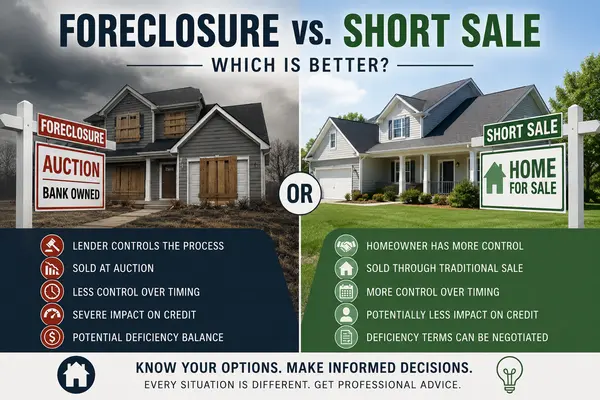
A short sale may be an option when the homeowner owes more on the property than the property is worth, or when the property's value is insufficient to pay off the mortgage, foreclosure expenses, and other liens.
For example:
-
Property value: $250,000
-
Mortgage balance: $280,000
-
Additional delinquent payments and foreclosure costs: $15,000
The homeowner may not be able to sell the property through a conventional transaction because the sale proceeds would not be enough to satisfy the debt.
A short sale involves obtaining the mortgage lender's approval to accept less than the total amount owed.
In certain circumstances, a buyer may also be interested in a lease-option arrangement, giving the buyer the right to purchase the property at a later date. However, the lease-option and any purchase arrangement must be structured carefully and disclosed appropriately. A short sale cannot simply be used to circumvent the lender's approval requirements.
The lender ultimately controls whether the proposed short-sale transaction will be approved.
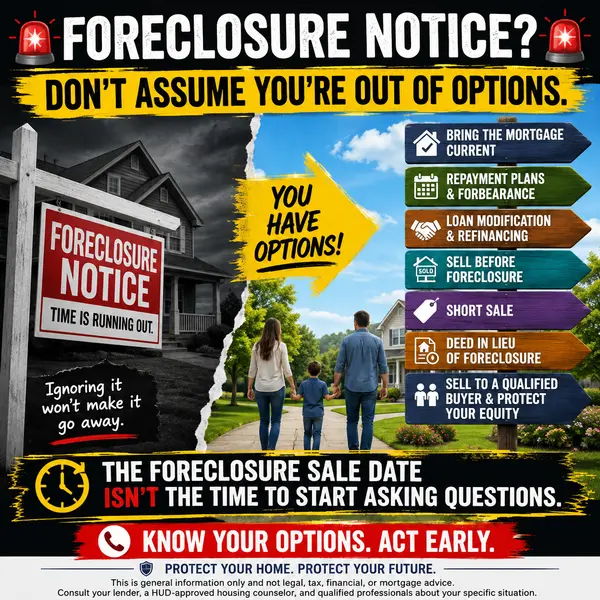
The Key Is Getting Involved Before the Auction
The biggest opportunity with distressed properties is often before the foreclosure auction occurs.
A homeowner who is already in foreclosure may still have:
-
Equity in the property
-
An assumable FHA mortgage
-
A favorable existing interest rate
-
The ability to negotiate with the lender
-
An opportunity to sell before the foreclosure sale
-
A buyer willing to structure a creative transaction
The earlier a qualified buyer identifies the property and understands the homeowner's financial situation, the more potential solutions may be available.
The Four Strategies at a Glance
| Strategy | Existing Loan | New Loan | Seller Financing | Potential Advantage |
|---|---|---|---|---|
| Subject-To | Remains in place | Usually no | Not necessarily | Preserve existing financing |
| FHA Assumption | Assumed by qualified buyer | Not necessarily | Potentially for equity | Preserve potentially low interest rate |
| Wraparound | Remains in place | Usually no | Yes | Alternative financing structure |
| Short Sale + Lease Option | Addressed through lender | Potentially later | Potentially | May work when property lacks sufficient equity |
The Bottom Line
A foreclosure doesn't automatically mean a property has to be purchased at an auction.
For buyers, the opportunity may be in finding the right property, the right seller, and the right financing structure before the foreclosure sale.
For homeowners, a properly structured sale may provide a way to avoid foreclosure while potentially preserving some of the equity they have built in the property.
These transactions can be complicated, particularly when an existing mortgage, foreclosure proceedings, FHA requirements, secondary financing, or a short sale are involved. Buyers and sellers should have the transaction reviewed by qualified real-estate, legal, lending, and title professionals before proceeding.
Categories
Recent Posts



GET MORE INFORMATION